
There’s a common assumption at the start of a software project that once you hand things off to the agency, you can step back and collect a finished product a few months later.
We get why that’s appealing, but that’s not how good digital products get built.
The reality is that your involvement throughout the project is one of the biggest factors in whether it succeeds. That doesn’t mean we expect you to know anything about design or development – that’s what we’re here for! What we need from you is something only you can bring: a deep understanding of your organization, your users, your internal realities, and what actually matters. Your job is to communicate your perspective, your priorities, and your vision. Ours is to translate that into something that works.
What your role looks like throughout the project
Your involvement will look a little different depending on the phase we are in. Early on, your participation helps shape the project around what matters most and supports important decision-making. Later, your role becomes more focused on validating and refining the work.
Here’s an overview of the project process and what you can expect at each stage.
Discovery phase: bringing your context to the table
The project will start with a Client Kickoff. This is essentially where you share anything and everything we need to know about your organization and your project. Anyone from your side who will be involved in the project should attend.
The meeting will include:
- Understanding what makes your organization unique, what you care about, and what matters most.
- Exploring the problems you’re trying to solve and the realities behind those challenges.
- Identifying who should be involved at different stages, who is responsible for approvals, and where decisions will be made.
- Confirming the main point of contact from your organization with the authority to make decisions.
- Reviewing the types of activities involved and validating the functional requirements of the project.
- Discussing timelines and team availability for the duration of the project.
- Aligning priorities and building a shared understanding of the discovery outputs.
From there, we move into the discovery phase, which is typically the most hands-on phase for clients. This is where we align on priorities, challenge assumptions, identify risks, and ensure we’re solving the right problem in the right way. Meetings will most likely happen weekly, but this heavier meeting schedule early on helps set the project up for success.
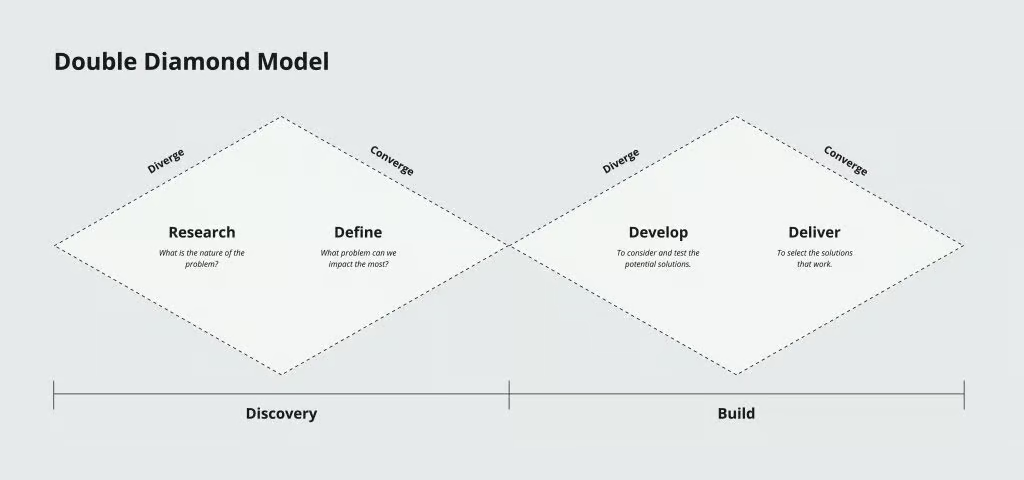
Research can include workshops, interviews, walkthroughs, and many other activities. Depending on the project, you may also help connect us with external end users, internal teams, or technical experts within your organization to ensure we fully understand the current landscape. Download our PDF breakdown on the value of research here.
This phase can feel detailed because it is. But that detail is what helps shape the Minimal Viable Product (MVP), define functional requirements, surface risks, and set the project up for the next phase.
Design and build: validating and staying engaged
Once your project moves into design and development, the rhythm often becomes steadier. You’ll have progress reviews either weekly or bi-weekly. These check-ins create space to review work, validate assumptions, approve designs, and make sure the project is still moving in the right direction.
We believe you should have direct visibility into your project and direct access to the people doing the work. That is why our project teams work closely with you throughout the process, and why specialists like developers, designers, and strategists are part of client conversations rather than hidden behind a project manager.
One of our biggest differences in how we work is that you don’t just meet with your project manager — you meet with your entire project team. All of our staff are within North American time zones, so you can schedule meetings or ask questions directly to anyone in the project team as needed.
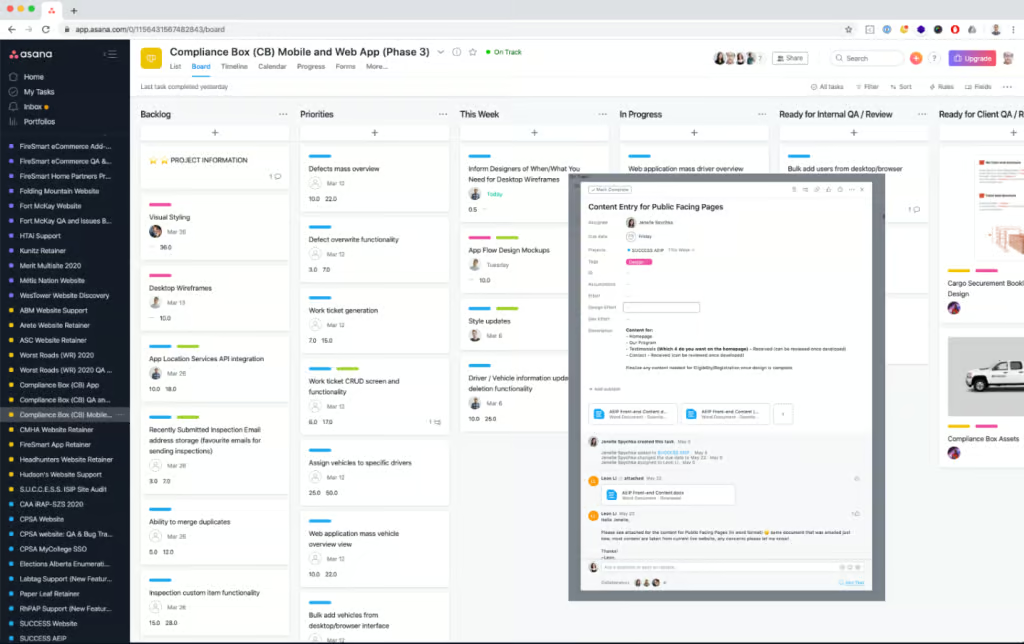
Outside of progress meetings, the entire project and all associated tasks live in Asana. You’ll have full access to see tasks, leave comments, ask questions, review assigned actions, and understand what’s coming next. We don’t hide anything from our clients. You’ll be able to see what’s being worked on in real time and communicate directly with project team members within tasks. We can also work flexibly within your existing tools (e.g., Slack, Asana, Teams) for better alignment.
UAT and training: validating the final product
Toward the end of the project, your involvement becomes especially important again. Once the work is development-complete and has gone through internal quality assurance, the project moves into User Acceptance Testing (UAT). This is where you review the product against the agreed-upon functional requirements and confirm that what was built matches expectations.
This step takes time and focus. Depending on the size and complexity of the project, UAT may take one to two weeks. You’ll receive testing instructions and guidance so you know what to review and how to work through the new software effectively. At the same time, we’ll train your team on the new system so everyone has a clear understanding of how it works and how to use it confidently.
Finally, when everything is ready, we’ll prepare for launch (yay!!) and discuss the launch process, along with how our team can continue supporting your fancy new software after launch.
What can slow your project down
There are a few common patterns that can create friction in digital projects, and most of them are less about technology and more about communication.
Some friction points we commonly see are:
- Decision-makers aren’t in the room.
This one comes up more than anything else. When the person who can actually approve something isn’t in the meeting, feedback has to travel through layers on its way back to us, and important context gets lost in translation. If you can get the right people in the room while we’re discussing the work, we can answer questions in real time and keep things moving. - Information gets held back.
Sometimes clients assume that an internal constraint, a hard deadline, a leadership preference, isn’t something we need to know about. It almost always is. If something is true about your organization or your project, we’d rather know it early and factor it in. Finding out halfway through the build leaves us with far fewer options. - Nobody says anything until it’s too late.
If something feels off, raise it. A recommendation that doesn’t sit right, a design that doesn’t match what you had in mind, a requirement that got missed somewhere in discovery. The earlier we hear it, the easier it is to fix. We’d genuinely rather you challenge us early than quietly disagree!
Better products come from better partnership
As you’ve probably gathered by now, we’re not a “buy it and don’t talk for three months” kind of agency. We want our clients involved throughout the project lifecycle because we know that collaboration creates the best outcomes. Sometimes this is a mindset shift from vendor to partner. We want you to ask why, stay curious, and challenge ideas alongside us so we can build the best possible solution together. Ultimately, this project is for you, and our goal is to create something that genuinely serves your organization and the people who use it.
We’ve truly seen it all across different platforms, industries, and organizational structures. Every project comes with its own challenges, priorities, and moving pieces. If you’re looking for a thoughtful partner to help navigate them, we’d love to chat.
FAQ
- Do I need technical expertise to be a good client partner?
No. You do not need to be an expert in design or development. Your role is to bring knowledge of your organization, users, internal processes, and goals so the project team can make better decisions. - How quickly do I have to respond?
It depends on the project, but if you have identified an immovable “must launch by” date, we’ll be very transparent about when timelines are at risk and when we need prompt feedback to keep things moving. We move quickly and rely on clients to do the same. While we always build buffers into our timelines, if you don’t respond for over a week every time we contact you, that is going to affect the project timeline. - Who from my team should be involved?
The most important thing is to involve the people who can make decisions, provide key context, and review work efficiently. If decision-makers are not in meetings, you can end up playing middle man or timelines can be at risk if we are delayed by internal approval time. We always recommend that the primary point of contact has the authority to make decisions so the project can continue moving smoothly. - How do you keep me informed on budget/costs?
We stay transparent about budget and communicate openly about any decisions that could impact timelines, scope, or costs. We’ll alert you to potential overages or risks before they happen and work with you to prioritize appropriately within your budget constraints. We also understand that projects evolve. If additional work or timeline adjustments are needed, we can issue change requests to support those updates clearly and collaboratively. - Can I talk directly to designers and developers?
Yes! A key part of the process is direct interaction between the client team and the people doing the work, including developers, designers, and product strategists, etc. Because all of our team members work within North American time zones, you can also book meetings directly with the people involved in your project whenever needed. - What is one “oh I didn’t think of that” I should consider?
People almost always forget about vacations. Most projects span several months, and if a key decision-maker is away for two or three weeks during a critical phase, we need to account for that in the timeline. Usually, we can plan work around those periods so momentum isn’t lost — we just need visibility into those schedules ahead of time.